When Measurement and Verification (M&V) professionals adopt an M&V 2.0 approach, machine learning (ML) and artificial intelligence (AI) help save time and effort in the analysis. They also support sophisticated modeling techniques.
AI in M&V
Learning Industry Trends
AI tools (e.g., Gemini, Chat GPT) can help you learn more about the industry:
- Helps you easily understand complicated regulatory docs,
- Learn best practices and new modeling techniques
- Give example projects/mock data to model with
- If obtaining an M&V certification (e.g., PMVA or CMVP), AI can create test questions to help you prepare for the exam
Data Cleanup
Manual data scrubbing is one of the biggest time sinks in traditional M&V. AI automates the tedious exclusion of insufficient or erroneous data, instantly removing utility errors (e.g., 0 kWh intervals) or filtering out reporting period temperatures that fall drastically outside the baseline range when utilizing forecast models.
Optimal, Site Specific Balance Point Detection
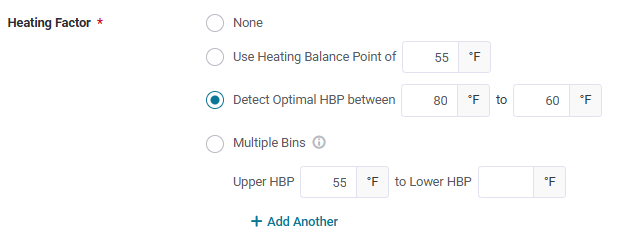
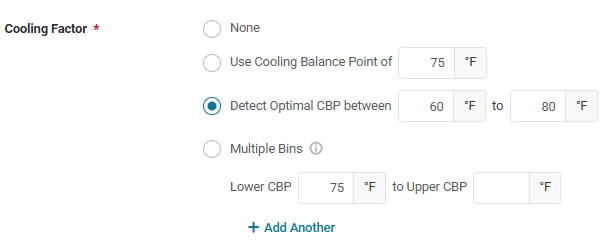
Finding the exact Heating Balance Point (HBP) and Cooling Balance Point (CBP) is critical, but manually testing them is time-consuming. AI algorithms analyze your site’s historical data alongside typical outdoor air temperatures to instantly suggest the optimal baseline and calibration periods, giving you a highly accurate, mathematically sound starting point to review.
Machine Learning in M&V
Sophisticated Modeling (TOWT)
M&V software with API and ML capabilities allows professionals to utilize Time-of-Week and Temperature (TOWT) models. These models, developed by the Lawrence Berkeley National Laboratory, can be used with buildings that have predictable occupancy patterns (e.g., schools, retail, offices) and granular consumption data. TOWT models use ML to understand patterns in hourly consumption to create an indicator variable for occupancy. This allows M&V professionals to use occupancy as a variable, without sourcing any occupancy data. When coupled with an API integration to import consumption data, M&V professionals can reduce effort and improve modeling capabilities.
Automated Non-Routine Event Detection
Non-routine event detection alerts help M&V professionals make corrective action quickly and adjust the baseline model. Machine learning in M&V software is able to compare the results of each model run and notify when savings or consumption substantially increase or decrease, or when passing parameters shift (i.e. R2, CV(RMSE), uncertainty). Shifting this approach from month to month to real time drives superior model accuracy and performance insights.